
Nineteen years, one knife
On the unglamorous work that makes effortlessness possible

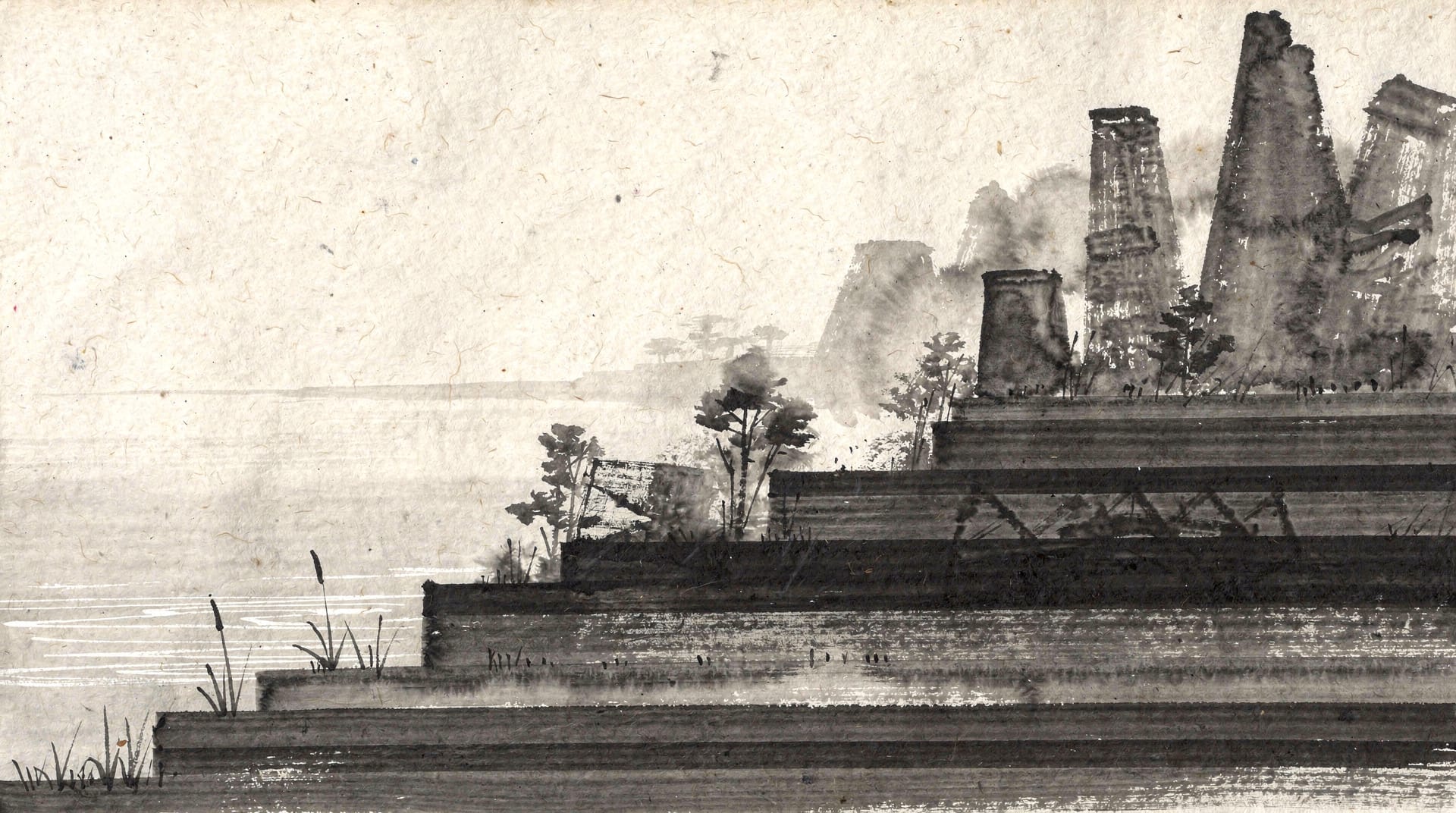
“When I first started, I saw the ox in its totality, just like most people. After three years, I no longer looked at the ox as an ox.” — Cook Ding, the Zhuangzi
There’s a story in the Zhuangzi about a cook who worked for a duke in ancient China. One day the duke watched him butchering an ox and was struck by his movements — gentle, confident, almost like a dance. His blade slipped in and out with a rhythm that sounded like music. “How did you develop your skills to such an advanced level?” the duke asked. The cook put down his knife. “What I follow is the Dao that goes beyond all skills, Your Highness.”
He’d learned to follow the natural flow — letting the knife find the gaps between the bones, moving through the structure rather than forcing through it. An average cook goes through a knife a month, because he hacks. A good cook goes through one a year, because he cuts. This cook had used the same knife for nineteen years. Thousands of oxen. The blade still sharp as ever.
The cook couldn’t skip to the spaces. He spent years seeing the whole ox first — learning the structure, understanding where the joints give way. The time and energy spent on the “boring” work of relentless practice made his eventual effortlessness possible.
I am not that cook.
About six months ago, I decided to get back to everything at once. Morning rituals, evening rituals, gym on a set schedule. I’d done each of these pieces before, separately, and they’d worked. This time I was putting the whole thing together. My wife said “you’re doing too much.” I said I was fine.
Two weeks later — maybe three — I was completely burned out.
The structure wasn’t the problem. Every piece was real and tested. The problem was underneath. I wasn’t eating enough. Hadn’t thought through the diet side at all — wasn’t buying the right food to support the intensity I was asking my body to handle. Hungry most of the day. Bad mood. Sleeping badly because I was hungry — and because I’d switched to working out at night, something I hadn’t done since my twenties, based on the advice of some random sleep personality inventory. Adrenaline at 10pm. Not ideal.
Every piece of the structure was sound. But it was all stacked on a body that wasn’t properly fueled or rested. The whole thing fell apart in about three weeks. Anna was right.
That pattern — skipping the foundation, wondering why things keep cracking — shows up everywhere. Not just fitness. Work. Relationships. Creative projects. Systems. The foundation is the unglamorous work that determines how high everything above it can go. Build it once, properly, earn trust through use, and everything after that is acceleration.
The sequence isn’t optional
Body before mind. Process before outcome. Foundation before acceleration. Each one builds on the one beneath it — the layer above only holds because the one below it is solid. Get them out of order and everything breaks.
Physical health is the substrate for mental performance — try doing your best thinking on four hours of sleep and no breakfast. A reliable process is what makes outcomes repeatable — without one, you can’t tell whether a good result was skill or luck. A verified foundation is what makes speed possible — you accelerate off something solid, or straight into a brick wall.
The Daoists have a term for what happens when the sequence is honoured: wu wei (無為). It’s often translated as “non-action,” which makes it sound passive. It isn’t. Wu wei is the effortlessness that comes after the foundation is earned. A musician who’s practiced scales for years doesn’t think about finger placement anymore. That’s wu wei — action without the overhead of self-monitoring. When the foundation holds, you forget the foundation.
But you can’t skip to wu wei. You earn it. The years of scales come first. The boring, repetitive, unglamorous work of building the base comes first. The effortlessness is the reward for getting the sequence right — not a shortcut around it.
I still get the sequence wrong more often than I’d like to admit. Knowing the principle and living it are different skills — and the gap between them is where most of my failures have happened.
I wrote in Momentum matters more than masterpieces about hundreds of small improvements instead of one saviour solution. That principle applies here too — the foundation should be proportional to what you’re building. A temporary shelter doesn’t need the same base as a skyscraper. Over-engineering the foundation is its own trap.
Pick one area where you keep hitting the same wall. Write down what sits underneath it — the thing you’d need to fix first before anything above it holds.
So if the sequence matters, how do you know when the foundation is ready? That’s a trust question.
Trust, not confidence
You know the feeling. You’re doing the work, but there’s a niggle, some quiet part of you in the background that keeps asking whether you’re actually doing what you should be doing. The spreadsheet you’re not sure about. The habit that works on good days but crumbles under pressure. The plan you keep checking instead of following.
That irritating voice is the tax you pay on a foundation you don’t trust yet.
The test isn’t confidence — confidence can be performed. It isn’t perfection — perfection is a mirage. It’s trust. Earned through use.
You know the foundation is ready when it’s a pleasure to use, not a source of friction. When you’ve stressed it enough to know how it behaves when things go wrong. When you can lean on it without a part of your mind still bracing for the crack.
There’s a sequence to this: direction first, then build, then verify, then trust. Each stage earns the next. Trust collapses the overhead. Once it’s there, you stop managing the base and start building on it.
That’s what the cook had. From the outside — ease. From the inside, it’s thousands of oxen. Nineteen years of finding the spaces before the knife could move on its own.
I’m not there yet with most of my own systems. My GTD setup with my OpenClaw, maybe — I trust it enough now to capture something and know it won’t disappear into a void. But my fitness routine? That one’s not even in the “still managing” phase. It’s in the procrastination phase. Which tells me exactly where the foundation work needs to happen next.
In Goals expire. Systems compound. I argued that systems beat goals because they survive bad weeks. The foundation is what makes the system trustworthy. A system you don’t trust is just a more elaborate form of anxiety.
Pick one system or habit you rely on. Ask yourself: do I trust it, or do I manage it? If you’re still managing it, that’s where the foundation work is.
And when you skip this — when you accelerate without trust — what actually happens?
The reset pattern
Skip the foundation and you don’t slow down. You collapse. Back to zero.
I wrote about compound erosion in that same piece — the slow, passive decay of not tending something. This is the other failure mode. Not gradual loss, but active collapse. You build something real, it breaks, and you’re standing in the rubble wondering what happened.
The single reset isn’t the problem. Sometimes you build carefully and still discover the base was weaker than you thought. That’s information. You adjust, you rebuild, you move on. The problem is the pattern — when you’re resetting for the third or fourth time and still blaming the structure above.
You know this one. The project that keeps breaking in the same place. The habit you restart every January. The relationship where the same argument surfaces every few months wearing a different costume. Each time you fix the surface problem. Each time it comes back.
That’s not bad luck. That’s a foundation telling you something.
The ceiling is set by what’s underneath, not by the work above it. You can push as hard as you want on what you’re building. The maximum height it can reach is bounded by what it’s standing on. Most people hit that ceiling and push harder. More effort, more hours, more intensity. The problem isn’t effort. It’s underneath.
I’m describing my own pattern here, not just yours. I’ve hit the same ceiling in enough areas to recognise the shape of it now — even when I’d rather not look down.
Look at your last restart — the habit, the project, the resolution that didn’t stick. What was missing from the base?
The perfectionist’s hiding place
“This sounds like an excuse to never launch. I could spend forever building the foundation and never actually do anything. At some point you have to ship.”
Completely valid. Foundation-building can be the perfectionist’s hiding place — endless preparation disguised as diligence. I’ve used it as one. I know what it looks like: one more book, one more revision, one more week of getting the system just right before you start the real work.
The test isn’t perfection. It’s trust. Can you rely on this without constantly second-guessing it? If yes, build. If you’re still tweaking because you’re afraid to start — that’s not foundation work. That’s avoidance.
The antidote is pressure. Ship something. Build in public. Put the work out before it feels ready — because “ready” is a feeling, not a state. The foundation doesn’t need to be flawless. It needs to be load-bearing. And you won’t know whether it’s load-bearing until you put something on top of it. The first version will be rough. That’s the point. You’re stress-testing the base, not performing the result.
I’m not always sure which one I’m doing — building or hiding. Sometimes I can’t tell until months later, when I notice the “preparation” has been going on for a while and nothing has gone up on top of it. That honesty is part of the practice too.
The foundation is never finished, either. It’s a living system — stop tending it and it degrades. But tending isn’t the same as refusing to build on top of it. The work shifts from construction to maintenance. And sometimes an opportunity arrives before the foundation is ready. You still jump. You have to. The goal is to have it ready before the window opens, so you can move without hesitation. Know when to say no. Know when to strike. That discernment only exists if you’ve been doing the work.
After the foundation
What’s the one thing that, if you fixed it, would make a lot of other problems easier? Name it. Even if fixing it means scrapping what you’ve built on top — even if it means going back to the base in one area and starting over — whatever you rebuild from that insight will be stronger than what you had before.
I’m still figuring out what my own foundation needs. Some layers I thought were solid turned out not to be. Some I rebuilt are holding better than I expected. I haven’t earned nineteen years with one knife yet. But the ox is starting to look less like a wall and more like a structure with spaces in it. That’s progress. I think.
What would you build differently if you went back to the base?
(The Cook Ding story is adapted from Derek Lin’s retelling in The Tao of Happiness.)
This piece was outlined and drafted with assistance from Claude (Anthropic). The ideas, experiences, and opinions are mine — the AI helped with structure, pacing, and getting words out of my head and onto the page.